

Market Volatility and Investing
With constant news headlines of rising rates and inflation, war in the Ukraine, ongoing culture wars and rising wealth disparity it can be hard not to become pessimistic at times. Especially when everything is magnified further by social media bluster. This is especially the case in financial markets, an early adopter of the never ending newsflow we’re now all so used to. Naturally, many investors are concerned about the recent market sell off…as at 30th June, the ASX200 index was down around -14% since its 2021 peak.
It’s important to remember that market volatility is nothing new. It is a completely healthy and normal part of investing, because markets go through cycles. Also, rather than pricing assets based on what is happening right now, markets attempt to “look through” what is occurring and anticipate the future, something that is difficult to do. The old joke that “economists have predicted six of the last two recessions” springs to mind.
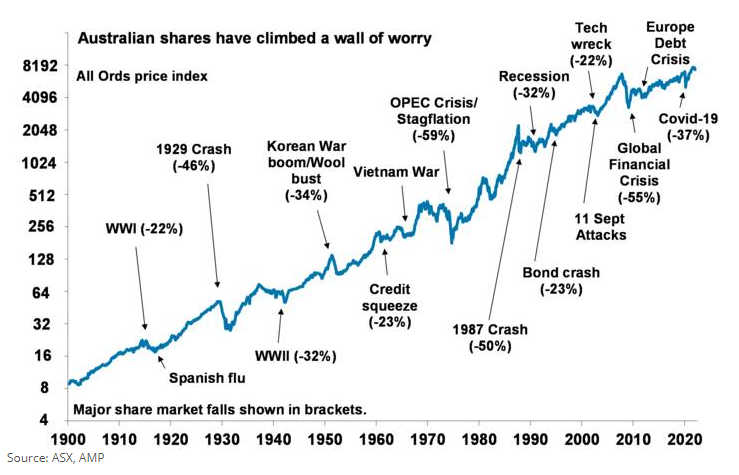
One thing that is far more certain is the long-term trend. The chart below shows the growth of the ASX All Ordinaries share index since 1900 up until 2022. As you can see, while there have been numerous events resulting in sell-off’s, the Aus equity market has always resumed its upward trend.
In fact it is this very volatility, or risk, that investors in growth orientated assets are being rewarded for with higher returns over the long-term. More stable asset classes, such as cash and bonds, generate much lower long-term returns as a result:
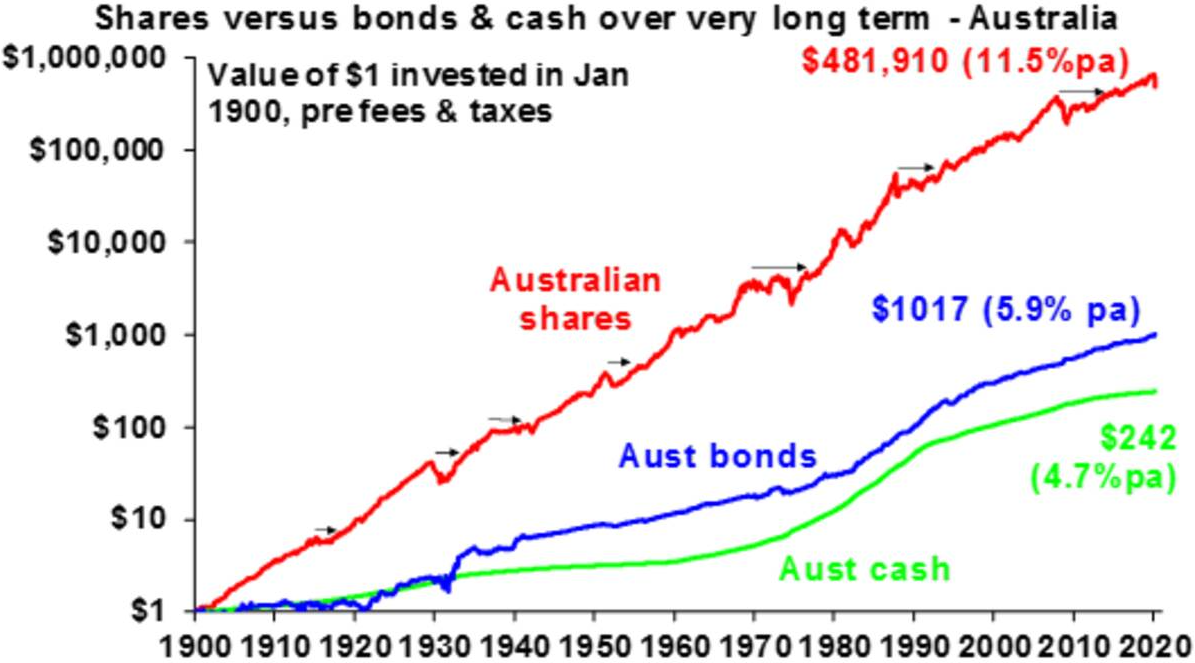
Put simply, the golden rule of investing is that “time in the market beats timing the market” and moving to a more Conservative investment strategy or selling out of growth assets after a market pull-back will only guarantee turning a paper loss into an actual loss, and mean missing out on the long-term trend.
General Advice Warning: The information in this communication is provided for information purposes and is of a general nature only. It is not intended to be and does not constitute financial advice or any other advice. Further, the information is not based on your personal objectives, financial situation or needs. You are encouraged to consult a financial planner before making any decision as to how appropriate this information is to your objectives, financial situation and needs. Also, before making a decision, you should consider the relevant Product Disclosure Statement available from your financial planner.